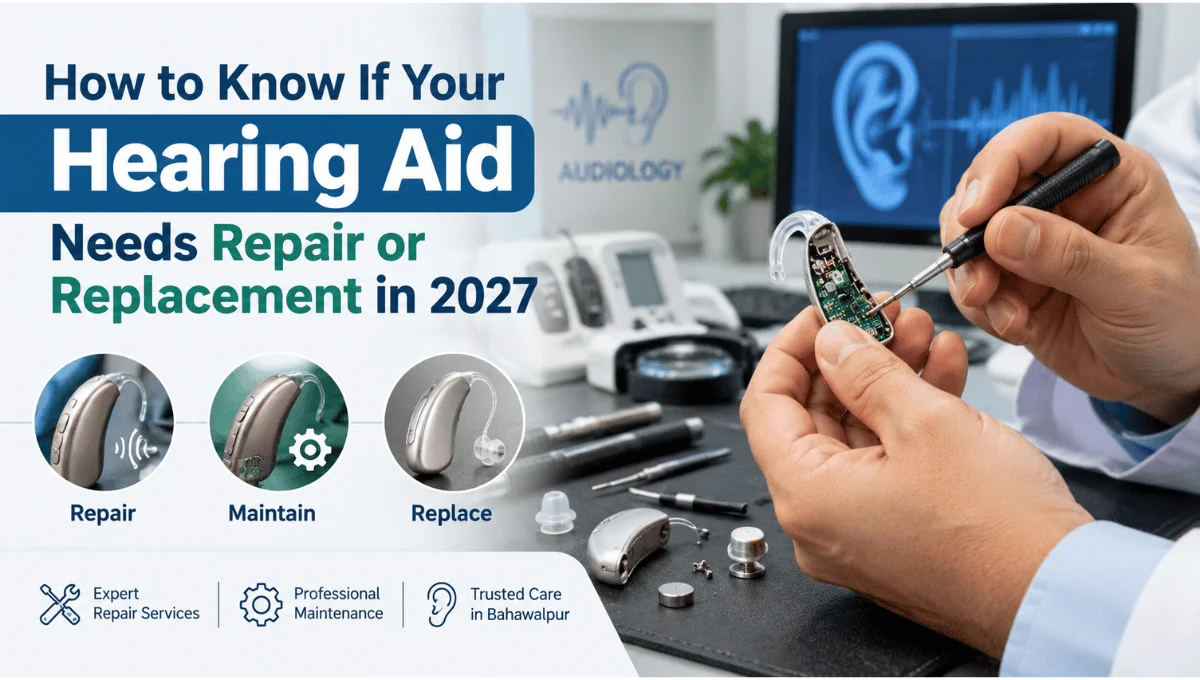
Hearing aids are small but high-tech devices that are worn every day, sometimes for hours. As they come into contact with earwax, moisture, dust, handling, and normal wear, performance issues are not uncommon. When a device stops working properly, the first question is often whether Hearing Aid Repair 2027 can solve the problem or whether replacement should be considered.
Some problems are comparatively simple, like a blocked wax filter or low battery. Others can include the microphone, receiver, internal electronics, physical parts, or programming. It is important to know the difference so hearing-aid users know to avoid unneeded replacement and know when to seek professional assessment. This 2027 guide explains common hearing aid problems, basic troubleshooting, professional repair, maintenance, and the factors to consider when deciding between repair and replacement.
Why Do You Need Hearing Aid Repair 2027 ?
Most modern digital hearing aids have more than one microphone, a receiver, a processor, a battery or rechargeable unit, and other sensitive components. These components work together to receive sound, process it according to the user’s hearing needs, and deliver amplified sound to the ear.
With proper care, performance can still be degraded with normal use.
Some causes of hearing aid issues include:
- Wax plugging a sound outlet or wax filter
- Excessive moisture and humidity.
- Low battery charge or depleted batteries.
- Damaged tubes or earmoulds.
- Microphone/receiver issues
- Accidental drop or impacts:
- Charging problems in rechargeable devices
- Programming or device changes
- Wear from the components over time
A problem with the hearing aid is also not the only possible explanation for a change in hearing. If a device seems to be working, but hearing has definitely changed, assessment by an audiologist may be appropriate.
7 Signs Your Hearing Aid May Need Repair
Early identification of problems can make hearing aid troubleshooting easier. If you’re seeing any of the following signs, a professional evaluation might be worthwhile.
2. Your hearing aid doesn’t make a sound.
If a hearing aid suddenly stops working, it doesn’t necessarily mean that it has stopped working entirely. The battery could be out of charge, the wax filter could be clogged, the sound outlet could be blocked, or the device may not be powered on properly. Simple inspections occasionally enable a diagnosis to be made. If it doesn’t make a noise, then it may need the services of a professional hearing aid repair.
2. Struggling to hear or hear clearly
Suddenly hearing speech that is soft, unclear, distorted, or inconsistent may indicate that the device is waxed or has debris in it, or that the battery or charge level is low. If the sound quality continues to be an issue, a performance check may be necessary, as there are multiple aspects to the issue.
3. The hearing aid continues to whistle.
Whistling is commonly known as hearing aid feedback. It can sometimes occur because the hearing aid repair 2027 or earmold is not positioned correctly. Earwax, changes in ear fit, device settings, or technical problems can also contribute. Persistent feedback should therefore be assessed rather than assuming that the hearing aid itself needs replacement.
4. Device is intermittently working.
If the hearing aid turns on and off repeatedly, or it does not sound the same every time it is on, it might be a problem with the battery, charging, connection, moisture, or a problem with its internal components. Intermittent faults may be caused by various issues, so a hearing aid technician or hearing-care professional may check the hearing aid and make a decision about the next steps.
5. The Hearing Aid is wet.
For anyone using a hearing aid, moisture is a factor to take into account, especially if they use them in warm or humid environments. Sweat, humidity, and accidental contact with water can interfere with electronic components.
Cleaning and drying instructions vary by manufacturer; users should read and adhere to the manufacturer’s instructions based on their individual device. Avoid applying excessive heat or attempting to dry a hearing aid using methods that could damage its electronics.
6. Physical Damage is NOT Normal Operation.
The casing should be professionally inspected if there is visible damage to the casing, such as cracked casing, damaged tubing, broken battery doors, loose parts, etc. Attempting to open and/or repair delicate internal elements at home might result in further damage and may impact any applicable manufacturer warranties or service contracts.
7. The hearing aid is not working as it did
There is no apparent physical issue, but the benefit that the device is providing is not the same.
This may be because of the Hearing Aid Repair 2027 or because of changes in hearing. If appropriate, an audiologist can evaluate hearing to see if the hearing aid can be cleaned, adjusted, programmed, repaired, or needs further evaluation.
What Can You Check Before Taking a Hearing Aid Repair in 2027?
A few safe checks may help identify straightforward problems before arranging professional hearing aid servicing. Make sure the device is switched on and check the battery or rechargeable battery level. Inspect accessible parts for visible earwax or debris and follow the manufacturer’s instructions for cleaning the device. Change filters, wax guards, domes, or batteries only when you are aware of the correct procedure and the compatible filter or component.
For rechargeable hearing aids, check that the charger is receiving power and that the hearing aids are seated correctly. Do not put items that are sharp in the microphone or receiver openings. You should also avoid dismantling the hearing aid or using liquids, household cleaning products, hair dryers, or other heat sources unless the manufacturer specifically recommends a method. If these simple troubleshooting tips don’t help, then professional hearing aid troubleshooting is the next advisable step.
What Happens During Professional Hearing Aid Repair 2027?
A hearing aid repair lab can take a systematic approach to replacing parts rather than just throwing it away because of symptoms. Visual examination and simple functional checks may be the initial steps. The professional might check the battery, charging system, microphone, receiver, sound outlet, tubing, earmould, physical components, and/or the performance of the device, depending on the reported issue.
Settings or programming (where appropriate) may also need to be checked for the digital hearing aid. The exact repair process depends on the hearing aid model, the fault identified, available replacement components, and manufacturer requirements. Some issues are local, and others may require the manufacturer or a service center to be repaired.
Hearing Aid Repair vs. Replacement: Which Is Better in 2027?
There is no single answer for every hearing aid.
The repair of hearing aids may be considered reasonable if the hearing aid is still meeting the hearing needs of the user, the problem can be repaired, parts are available, and the repair cost is reasonable. Replacement may deserve consideration when the hearing aid has repeated major faults, repair costs become disproportionate to the device’s remaining value, suitable parts are unavailable, or the technology no longer adequately supports the user’s current hearing needs. The decision should be based on the child’s age and not the parents.
The person’s existing hearing ability and listening needs can be taken into account by an audiologist, and the repair professional can evaluate the physical and technical situation of the device. Those factors, taken together, offer a more effective foundation for choosing repair versus replacement.
How to Reduce Future Hearing Aid Problems
Regular Hearing Aid Repair 2027 and proper maintenance can help reduce avoidable hearing aid problems, although they cannot prevent every technical fault. Follow the manufacturer’s guidelines for keeping hearing aids clean and dry. If applicable, regularly inspect wax guards, domes, earmoulds, and tubing. When not in use, store devices in a secure manner and change batteries and clean devices over a soft surface.
Use of rechargeable devices must be with compatible charging devices, and disposable batteries must be handled as per the manufacturer’s instructions. Regular professional checks are also helpful, particularly if sound quality or physical fit has altered.
Hearing Aid Repair in Bahawalpur
When looking for professional Hearing Aid Repair 2027 services in Bahawalpur, it is important to consider more than simply fixing the device. A hearing aid is a personalized medical device, and performance problems may be related to fitting, programming, earwax buildup, technical faults, or changes in an individual’s hearing.
Majeed Audio-Vestibular Clinic provides professional support for common hearing aid concerns, including weak or intermittent sound, feedback, battery problems, moisture-related issues, physical damage, and other performance difficulties. Our hearing aid services in Bahawalpur can help determine whether a device requires troubleshooting, maintenance, adjustment, repair, or further hearing assessment.
When Should You See an Audiologist?
A hearing aid repair 2027, maintenance, and a change in hearing are not always the same issue. If you experience a sudden or dramatic loss of hearing, you don’t hear the same as you did before, or if you have new ear symptoms, consider having a hearing evaluation done by a professional.
One example is when someone experiences a hearing loss suddenly, they should seek immediate medical care, not routine hearing aid repairs.
Final Thoughts
Not every Hearing Aid Repair 2027 that is not working properly requires replacement. Weak sound, feedback, exposure to moisture, battery life problems, or physical damage are all potential issues that may need professional hearing aid repair.
Majeed Audio-Vestibular Clinic is a professional hearing aid troubleshooting, maintenance, and repair solution for all types of hearing aids and for the people according to their specific hearing needs and requirements in Bahawalpur. Your hearing aid may need adjustment, repairs, or replacement. Our team can determine if your hearing aid needs to be replaced, adjusted, repaired, or serviced.
Never let a hearing aid problem get in the way of everyday communication. Contact Majeed Audio-Vestibular Clinic in Bahawalpur to have your hearing device professionally assessed and get the right guidance for better hearing aid performance.