Pure Tone Audiometry
Introduction
Understanding Audiometry Test
Pure Tone Audiometry (PTA) is a widely used diagnostic hearing test designed to measure hearing sensitivity and identify the type and degree of hearing loss. During the assessment, a qualified audiologist determines the softest sounds a person can hear across different frequencies using air and bone conduction testing. For individuals seeking a professional hearing test in Bahawalpur, this audiological assessment provides valuable clinical information about hearing function and helps determine whether further evaluation, treatment, or hearing support may be required. This is a safe, non-invasive procedure that can be used to evaluate a variety of hearing issues.
What is Pure Tone Audiometry?
Pure Tone Audiometry (PTA) is a standardized hearing assessment used to evaluate an individual’s hearing sensitivity. It is the most widely utilized and essential diagnostic tool employed by audiologists and other hearing healthcare professionals to assess hearing function. PTA plays a crucial role in identifying the type, degree, and configuration of hearing loss, thereby enabling clinicians to establish accurate diagnoses and formulate appropriate treatment plans.
How Does Pure Tone Audiometry Work?
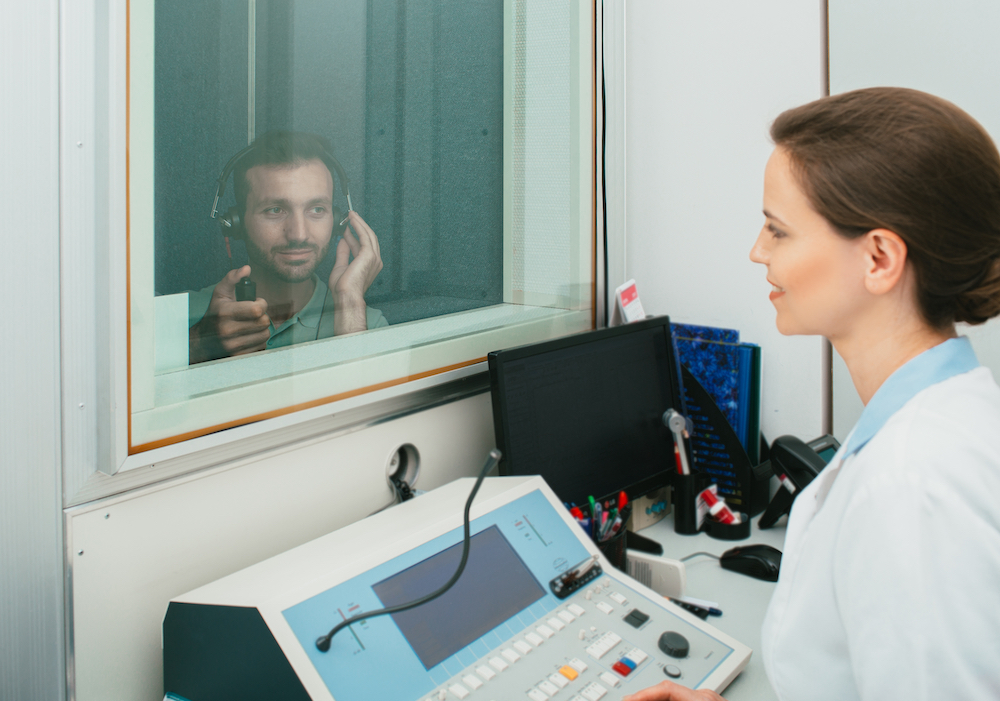
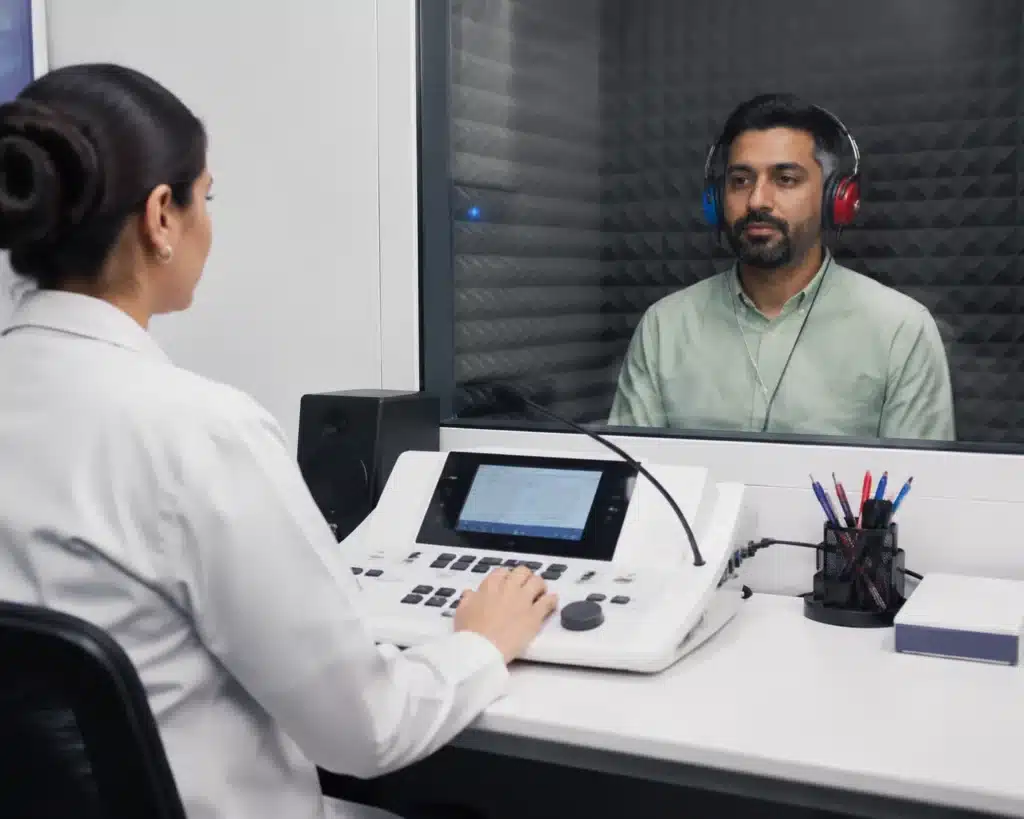
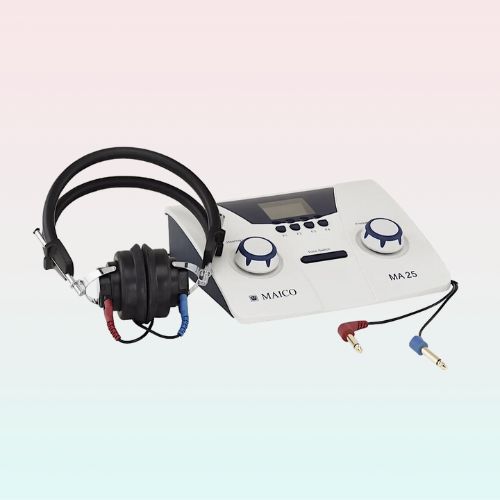
During an audiometry test, the individual wears headphones and listens to a series of pure tones or beeps at different frequencies and volumes. The individual’s task is to respond whenever they hear a sound by raising their hand, pressing a button, or indicating in any other way. The results are plotted on an audiogram, which is a visual representation of the individual’s hearing thresholds.
Understanding Audiograms
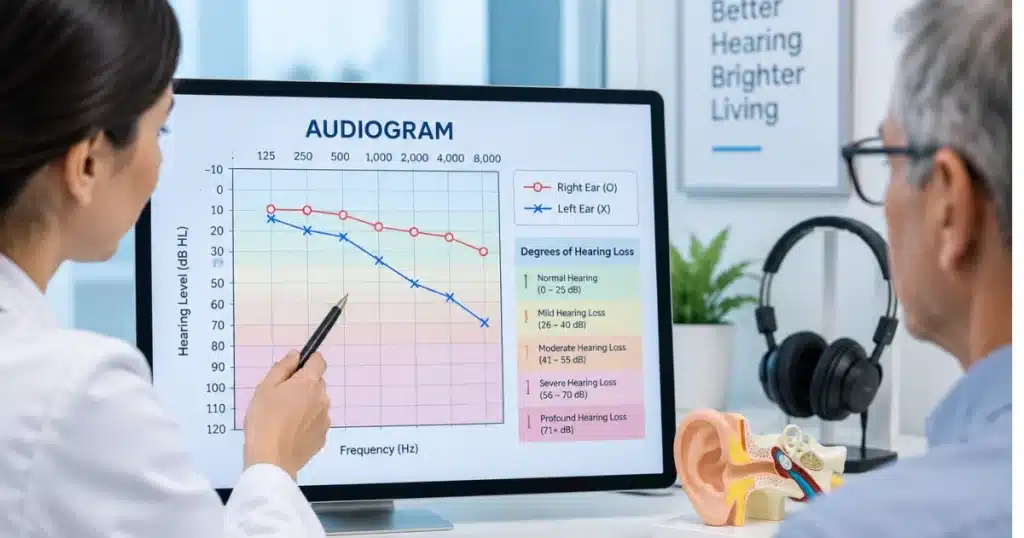
Audiograms are graphical representations used to illustrate an individual’s hearing thresholds across a range of frequencies. The horizontal axis denotes frequency, measured in Hertz (Hz), while the vertical axis indicates sound intensity or loudness, measured in decibels (dB). Hearing thresholds are plotted using standardized symbols—typically “X” for the left ear and “O” for the right ear. These symbols are connected to form a pattern, enabling clinicians to assess the type, degree, and configuration of hearing loss.
Types of Audiometric Hearing Tests
Hearing Function Test encompasses several test types, each selected based on the purpose of the assessment and the age of the individual. Some of the most commonly used methods include:
1. Air Conduction Audiometry:
This is the standard form of Pure Tone Audiometry used to evaluate overall hearing sensitivity across a range of frequencies. During the test, the individual wears headphones and responds to pure tone stimuli delivered through them.
2. Bone Conduction Audiometry: This type of test bypasses the outer and middle ear and directly stimulates the inner ear using a bone conduction vibrator. It helps identify if the hearing loss is due to a problem in the outer or middle ear or if it originates in the inner ear or beyond.
3. Masking: When testing one ear, masking is used to prevent the other ear from responding to the sound stimulus. This is done by introducing white noise or another sound in the non-test ear to ensure that the individual only responds to the sound presented in the test ear.
4.Pediatric Audiometry: Diagnostic Audiometry can also be adapted for testing infants and young children who may not be able to respond reliably to pure tones. Visual reinforcement audiometry, play audiometry, or conditioned play audiometry are some of the techniques used to make the test child-friendly and obtain accurate results.
Why Audiometric Hearing Assessment Is Important
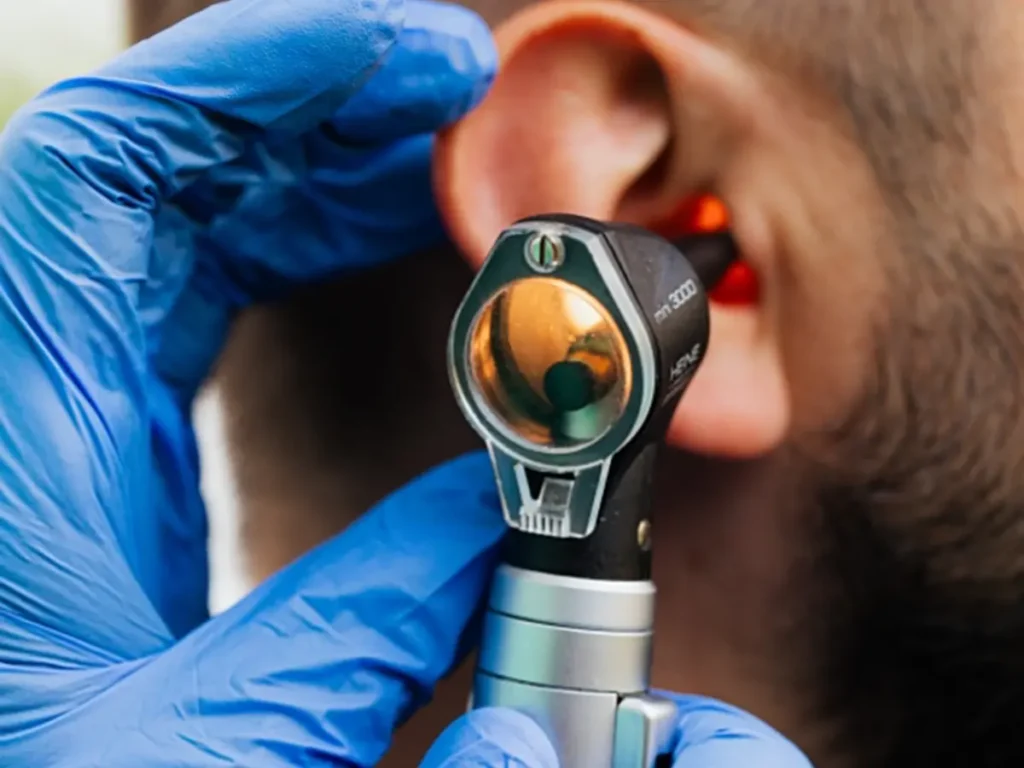
A comprehensive hearing assessment plays an important role in diagnosing hearing loss and evaluating an individual’s overall hearing ability. This audiometric hearing test helps audiologists accurately determine the type, degree, and configuration of hearing loss by measuring hearing thresholds across different sound frequencies. Accurate results from a hearing evaluation provide valuable clinical information that can support appropriate treatment planning, hearing aid recommendations, and further audiological care. Here are some key reasons why audiometric testing is important:
1. Early Detection of Hearing Loss: A hearing examination can detect hearing loss at an early stage, allowing for timely intervention and management. Early detection is essential in preventing further deterioration of hearing abilities and minimizing the impact of hearing loss on an individual’s quality of life.
2. Customized Treatment Plans: Based on the results of the air conduction test, customized treatment plans can be developed to address the specific type and degree of hearing loss. This may include hearing aids, assistive listening devices, cochlear implants, or other interventions tailored to the individual’s needs.
3. Monitoring Progress: Hearing assessment can be used to monitor the progress of an individual’s hearing abilities over time. Regular follow-up tests can help assess the effectiveness of the treatment plan and make necessary adjustments to ensure optimal outcomes.
4. Occupational and Safety Considerations: Clinical audiometry is commonly used in occupational settings, such as industries with high noise exposure, to ensure that employees are not at risk of noise-induced hearing loss. It is also used in safety evaluations for tasks that require good hearing abilities, such as driving or operating heavy machinery.
5. Legal and Insurance Purposes: Pure Tone Audiometry results are often